
Post Exertional Malaise and Myalgic Encephalomyelitis (ME/CFS)
Post Exertional Malaise (or PEM) is one of the most common symptoms of many chronic illnesses, and is one of the defining symptoms of Myalgic Encephalomyelitis (ME/CFS).
This very limiting symptom is something that likes to rear its ugly head even when you think you’ve been so careful. And can come in many forms – sometimes I don’t even realise it’s what I am experiencing until my husband reminds me I have overdone it and what I am experiencing is the result of that. The dreaded PEM.
As it’s such an important part of my life with ME/CFS, I thought it was high time I shared a bit more about it here on the blog.
No time to read now? Pin it for later.

What is Post Exertional Malaise (PEM)?
If you don’t suffer from a chronic illness, or have someone in your life who does, this is probably an entirely new term.
To put it in as simple as I possibly can, post exertional malaise is the result of exerting your body (or mind) too much and your body’s reaction to that.
If you are a ‘healthy’ person, this would be when you do a hard workout at the gym, or run a marathon, or hike a mountain. After this extreme exertion you will be more tired, your body will ache, or hurt, you may get a headache, your eyesight might become blurry. You may get other symptoms entirely.
There are three main differences between a normal person’s experience of PEM and that of someone with chronic illness:
1 – the amount exertion that leads to Post Exertional Malaise
For a normal person, you need to do quite a lot before you experience this. It’s not that common to experience it on a daily basis.
This isn’t limited to physical activity either – you may have had a busy couple of days at work, and feel that mental exertion, or maybe you’re a parent with young children and surviving on broken sleep. These are all things that could contribute to PEM.
However, for someone like me, or any one suffering from a chronic illness, I don’t need to do a lot before the PEM kicks in.
Physically, something as simple as drying my hair can cause this. In a PEM energy crash I am not even able to hold a hair dryer up. It happens with just going for a walk, or even walking upstairs in my house. In fact, there has not been a single day over the last 10 years when my legs did not ache from exertion – no amount of rest seems to stop it, they have always moved and exerted too much.
Mentally, it can be as much as reading a text or having a conversation that triggers it. I often need to leave messages on read so I don’t forget to reply when I have more energy, because I do not have it in me to read and comprehend the message, let alone formulate a reply.
2 – the severity of the PEM experienced
I’m going to keep using the marathon reference, just because it is an easy way to explain it (and because the London Marathon was last weekend so it’s fresh in my mind) but please know that there are many other physical and mental causes of PEM!
When you’ve run a marathon, whether you’re a seasoned runner or this is your first one, you initially will experience some pain and aching in your muscles telling you that you need to rest them. You might struggle to sleep a bit because they hurt, but after a night of sleep you are feeling better, and after taking it easy the next day you are ready to get back to training. And that’s it.
For people with a chronic illness, doing something like going for a walk or carrying something heavy, or even just rolling over in bed, will trigger more intense aches and pains, as well as other symptoms.
For me personally (and we are all different) it feels like I am wearing a fully bodysuit made of lead, every day. As I write this my body is heavy, my eyes are tired and I am struggling to concentrate. But I’ve not done anything more than what a ‘normal’ person would have done this week. Work and rest, that is basically it.
The severity I experience is not in line with the amount I exert myself.
3 – the delay between the exertion and the malaise
The normal expectation would be to experience increased fatigue and pain in the hours following, or even the day after, exerting yourself. Again with the example of the marathon, you’d expect to initially be in a lot of discomfort, which continues over the next couple of days in lesser amounts.
For someone with ME/CFS or Long Covid, there is often a delay in this feeling. It can sometimes be a couple of days before we feel it, which can make planning very difficult. It’s also fun to play the game of ‘what have I done to make myself feel this crap?’ I often do not know the answer because I may have spent the last two days resting.
Tracking apps, like Visible, are helpful in the planning side of PEM – you can track what you’ve done each day and what symptoms they have led to, so you know what to expect next time. If you are struggling with this side of things I do recommend finding a way of tracking things that is suitable for you.
How do you manage PEM?
I am probably the wrong person to talk to about this, as despite living with ME for nearly ten years I am still absolutely rubbish at managing my post exertional malaise. It can be really hard sometimes feeling like you’re missing out and wanting to be like everyone else, so the tendency to push myself too hard is very common.
But the best, and most effective, way I know of managing this symptom is pacing. I know people with Long Covid who have seen improvements in their capacity due to effectively pacing, it is the number one best way to ‘treat’ ME and Long Covid.
Pacing essentially means working within your energy budget for the day, and working on keeping your heart rate in rest mode as much as possible. Again tracking apps are really useful for this.
You need to make sure you prioritise rest, spread more physically and mentally exerting tasks out so you’re not doing too much at once, and take frequent breaks in between to reset yourself to baseline. At the start this will look like doing little to nothing every day, but eventually you should be able to build up the ability to do more.
What do I do?
For me, and again I am absolutely not an expert here, it is a case of planning what I WANT to do in a day, and what is my PRIORITY. Sometimes there are things that need to be done, and sometimes it’s just nice to have done them but not essential. Then I plan out what I can do, and when, with breaks in between. Some days I feel more capable, others I don’t, and I try not to beat myself up when I don’t!
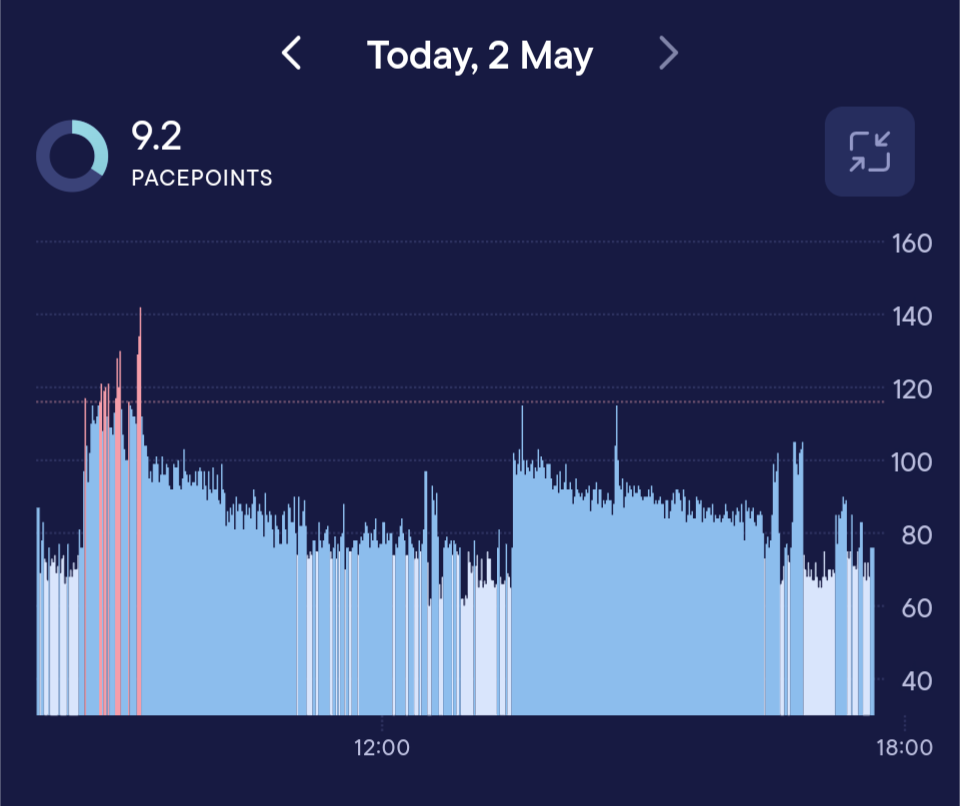
My Visible app tells me when I’m over exerting myself, so I know I need to stop and take a break (I’d have no idea otherwise). It has also helped me identify that to really get into rest mode the best thing for me is to lie down, so I try to do that when I’m taking a break. This isn’t an ad for Visible by the way, it’s just what I use and have found useful.

So, in summary, PEM is a severe, un-proportional reaction to physical or mental exertion. It can last an undefined amount of time, and can also be delayed following the exertion. The best way to manage this is by pacing your energy use throughout the day, and making sure you are getting enough rest.
If you want to read more about pacing, the ME Association have a really informative (free) leaflet on it here.
If you have any questions on PEM or pacing (or alternatively any advice!) feel free to pop a comment below.

Share this:


You May Also Like

Simple tips for getting through the tough days

Tips to help you sleep better
